Narrated Deck
A document becomes a deck that presents itself: narration, captions, an HTML deck and an MP4.
Narrated Deck: its example films and styles →
How it works
- 1Copy the install prompt and paste it into your agent.
- 2Your agent runs mo doctor to check Node.js, FFmpeg and Chrome, and tells you how to install anything missing.
- 3Give it your material. It renders an MP4 on your computer, and you ask for changes in plain words.
Paste into Claude Code, Codex, Cursor or any agent that supports skills.
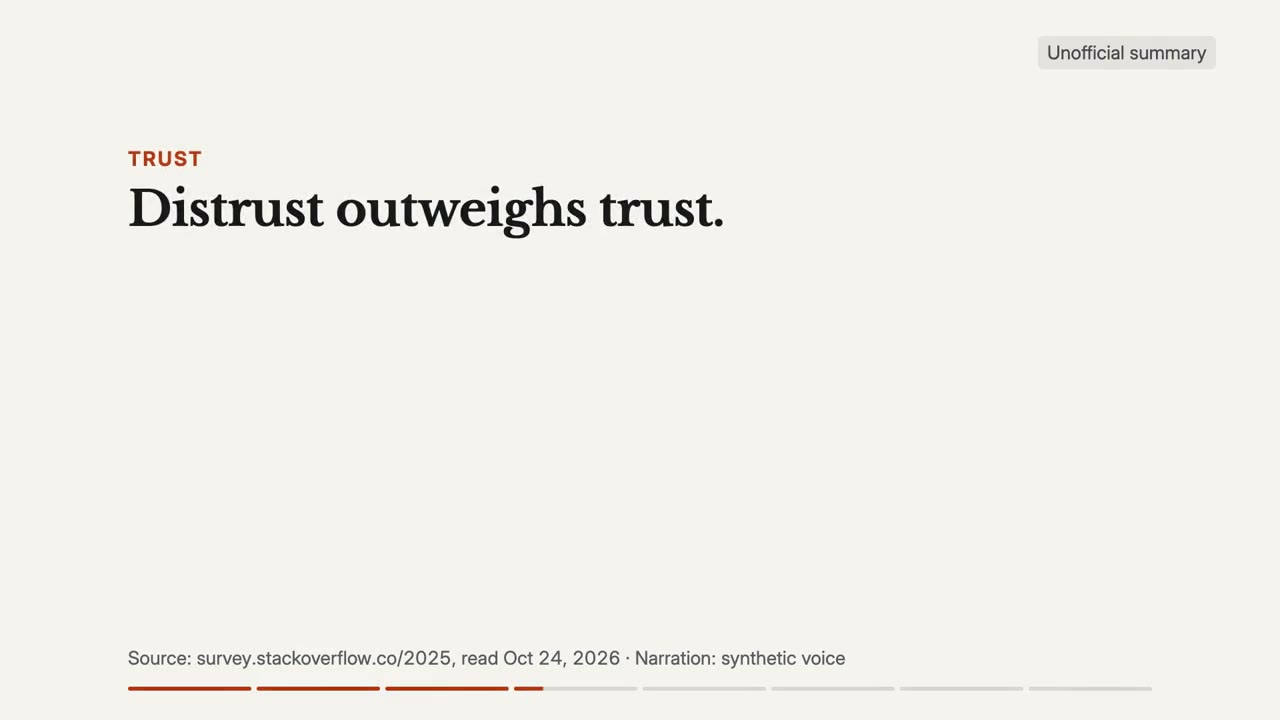
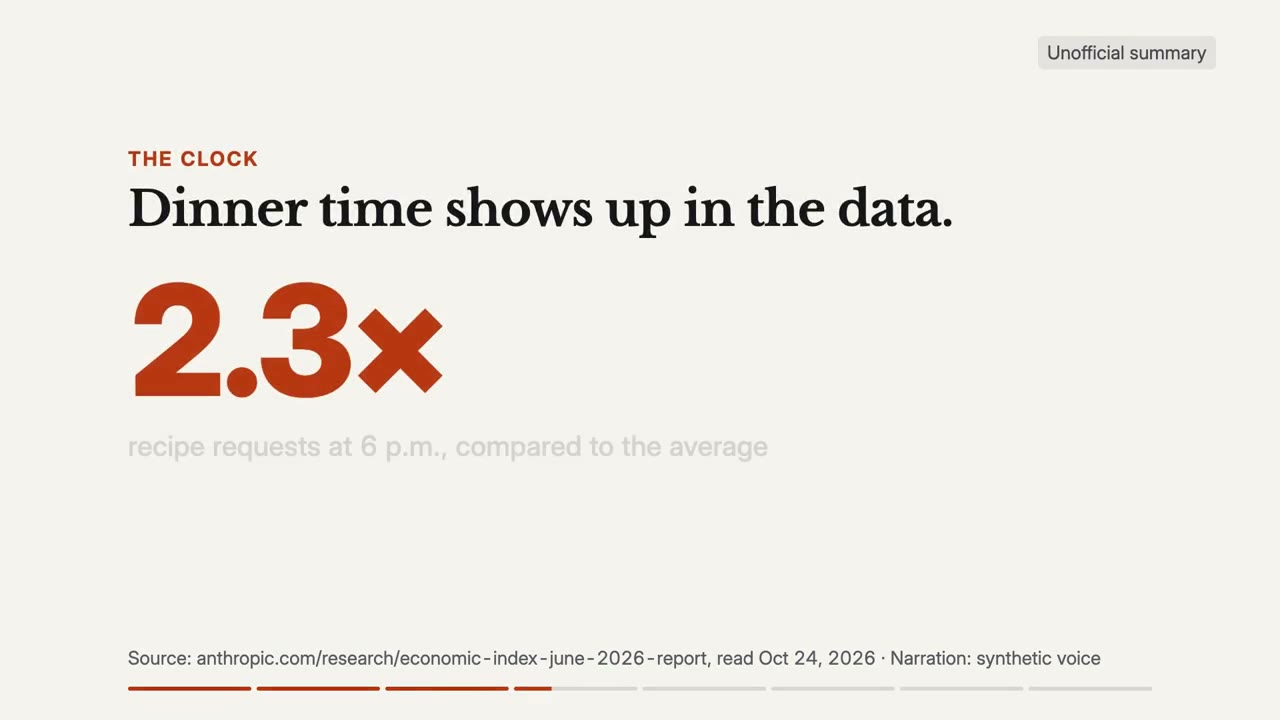
Films it made
All it takes
No API keyThis is all it needs
- A document, article or script
Dependencies
Node.js 22+, FFmpeg and Chrome. Voice: your own recording, an ElevenLabs or HeyGen voice, or a free synthetic voice (downloaded once, about 350 MB). No API keys needed for the free voice.
Before it starts, your agent runs mo doctor to check Node.js, FFmpeg and Chrome and tells you how to install anything missing; if this skill needs more (such as whisper for captions), its instructions say so.
Use the deck-director skill to turn this PDF report into a 2-minute narrated deck with captions.
Turn the attached [report, survey or paper] into a 90-second narrated deck of about [N] slides: one point per slide in the document's own words, one of its figures per slide with the page it comes from, the answer on the first slide for [who will watch, e.g. the people at my presentation]. Read it with [my recording / my ElevenLabs or HeyGen voice / a free synthetic voice], change each slide on the words that say it, and give me the MP4, captions and a deck I can click through. Use only the document I attach and its numbers; don't change a word or number. End on the answer and the source, held for 3 seconds.

Document: [file or link]
Audience: [who]
Nothing to install: paste this into Claude Motion (Team or Enterprise) or give it to Opus 5.5 for a similar look. The result changes from run to run; the skill works from your own material and renders on your computer.